A violet beam is easy to see. The detail you are looking for may be much harder to find. Choosing between 365nm and 395nm starts with that difference: the light coming out of a flashlight is not the same thing as the fluorescence coming back from an object.
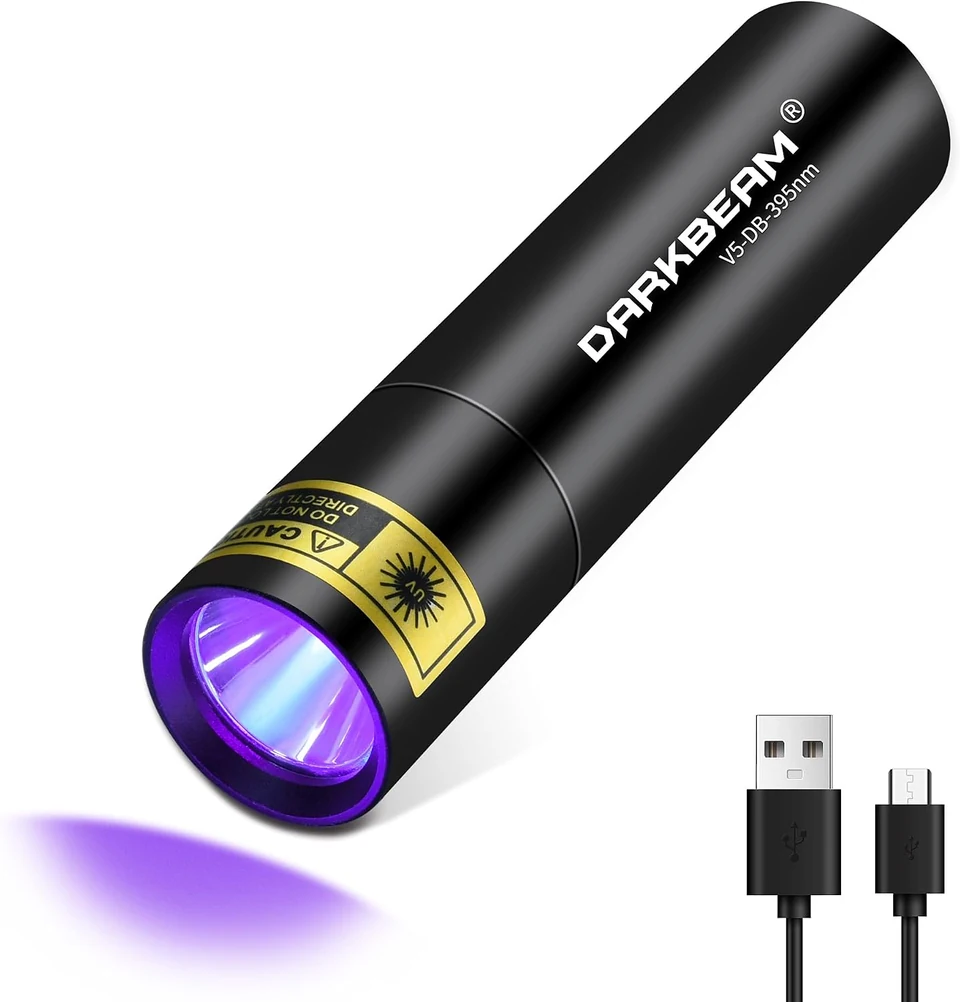
At DARKBEAM, we offer both wavelengths because they answer different needs. You might want a compact light for occasional household checks, a filtered beam for inspecting a collection, or two wavelengths to compare how a material responds. This guide helps you make that choice without treating a bigger number, brighter purple glow or larger advertised wattage as an automatic upgrade.
What the wavelength number actually tells you
A nanometer is a unit of length. On a UV flashlight, the wavelength identifies the region of light the LED is designed to emit. Both 365nm and 395nm sit in the long-wave ultraviolet region commonly called UVA. The number describes the light, not the flashlight's size, battery capacity or total optical output.
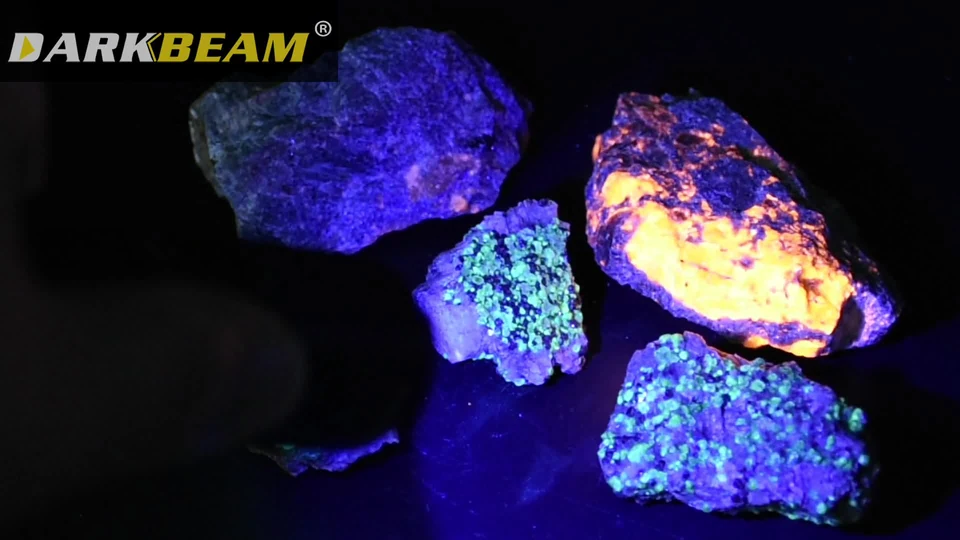
Fluorescence happens when a material absorbs excitation energy and emits light at a longer wavelength. That visible response is why a mineral, security feature or trace on a surface can look different under UV. Different substances do not respond equally to every wavelength. Some react more clearly to one source; some barely react at all.
This makes UV a way to observe differences, rather than a universal identity test. A glowing object is not automatically valuable, genuine, dirty or dangerous. Its response is one piece of information to interpret alongside the object's known properties and other appropriate checks.
“Differences in excitation wavelengths between lamps may produce inconsistent fluorescence reactions.”
GIA, research on fluorescence and optical defects
The GIA observation is especially useful for collectors: changing your light can change what you see. It is a reason to record your inspection conditions, not a reason to distrust every observation. Start with a consistent setup and compare like with like.
365nm and 395nm, side by side
| Question | 365nm | 395nm |
|---|---|---|
| What does the beam look like? | Usually less visibly violet; filtering can further reduce visible spill. | Usually a more obvious violet glow. |
| Why choose it? | To make some fluorescent responses easier to distinguish from surrounding light. | For straightforward close-range exploration and many everyday fluorescent effects. |
| Does every material respond? | No. Response depends on the material and conditions. | No. A bright beam cannot make a nonresponsive material fluoresce. |
| What else matters? | Filter, beam shape, output, working distance and battery. | Beam shape, output, working distance and battery. |
| Is it ordinary task lighting? | No. Carry white light for moving around. | No. Visible violet spill does not replace white light. |
We describe these differences without promising that one wavelength wins every task. A small filtered 365nm light may be a more comfortable choice for close inspection than a large unfiltered model. A compact 395nm model may be all you need for an occasional check. Match the tool to the subject and the way you will actually carry it.
What a filter changes
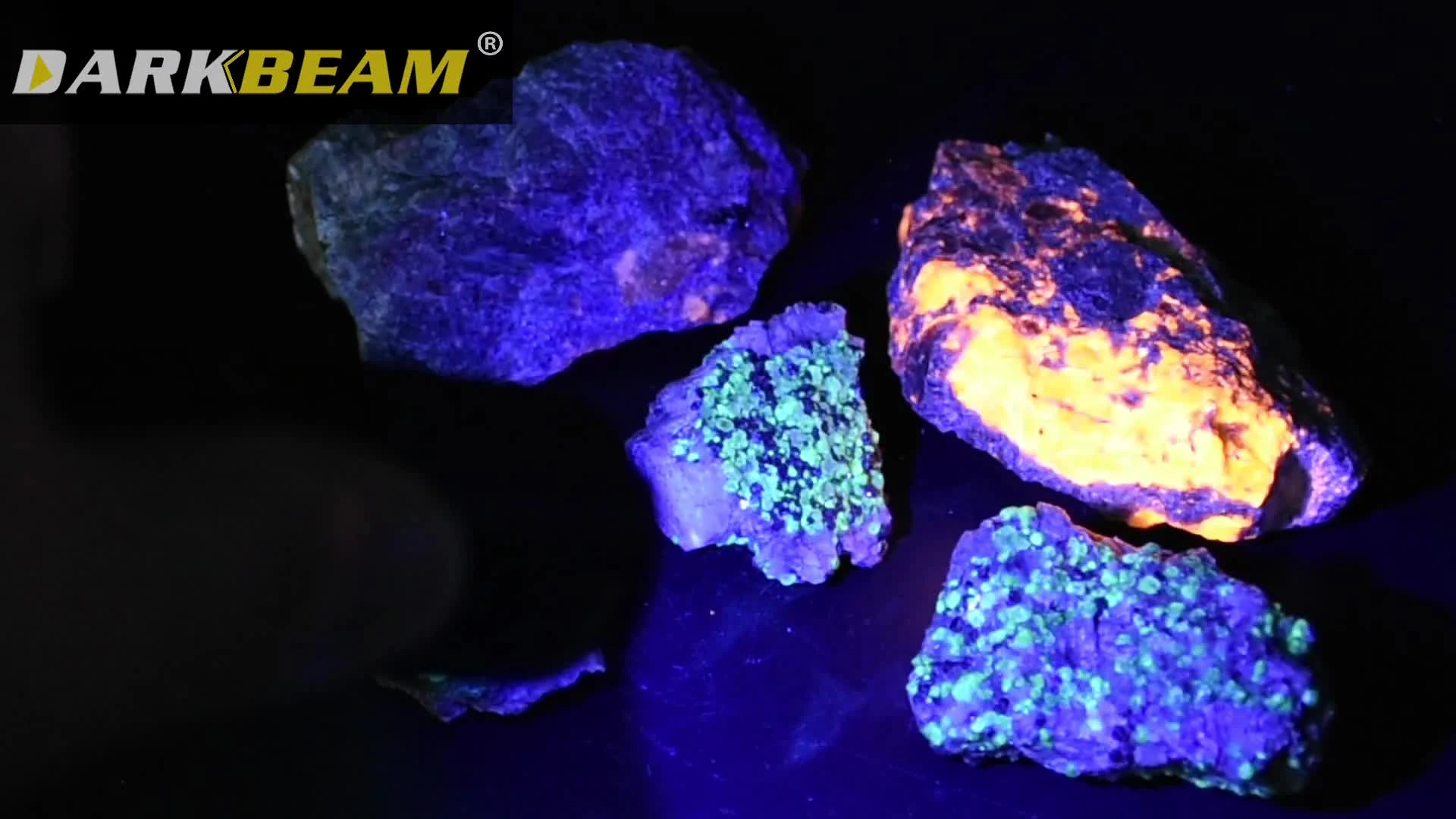
A filter is a separate part of the optical system. On a filtered UV flashlight, it reduces unwanted visible light passing through the front of the lamp. This can make fluorescence stand out against a darker background. It does not turn every 365nm flashlight into the same instrument, and it does not prove a particular measured UV output.
Look for an explicit filtered description on the exact model. Do not assume that a dark-looking lens, a blue ring or the number 365 alone establishes the filter specification. In our collection, the filtered V4 and V82 provide compact starting points; larger filtered models offer different handling and beam arrangements. Their size and charging format still matter.
A filtered beam can look less dramatic on a plain wall. That is not, by itself, evidence that the battery is weak or the light is faulty. Human vision is not a UV power meter. Evaluate the intended fluorescent subject under controlled conditions, and use suitable measuring equipment if your application requires a quantified result.
Choose by the job, then by the flashlight
For a mineral or glass collection
Begin with the material you want to examine. A filtered 365nm light is often a useful long-wave starting point because less visible spill can make the response easier to see. Keep the specimen on a stable surface, darken the room and move the light gradually rather than holding it against the object. Photograph and label your conditions if you want to compare results later.
Do not treat fluorescence color as a complete mineral or glass identification. Composition, coatings, restoration and surface residues can all affect appearance. A seller's statement and a bright glow are not a substitute for appropriate provenance or professional testing when money, authenticity or safety is at stake.
For household surface checks
Either wavelength may reveal useful differences on a surface. Darkening the room, scanning methodically and looking at the same area in white light often matters more than simply choosing a larger flashlight. Detergents, fibers and everyday residues can also fluoresce. Our household UV inspection guide explains how to make a useful map without treating every bright patch as a diagnosis.
For crafts and compatible materials
If a material is designed to cure with UV, follow its manufacturer's specified wavelength, exposure method and time. A flashlight that produces an attractive glow is not automatically a suitable curing system. Shadowed areas, thickness and uneven distance can prevent a complete result. Do not assume a tack-free surface proves the entire material has cured.
Use the material's instructions to decide whether a handheld source is appropriate at all. A dedicated enclosed curing setup may be the better tool for a repeatable process. Our role is to help you choose light accurately, not to replace the instructions that belong to a resin, coating or adhesive.
When two wavelengths are useful
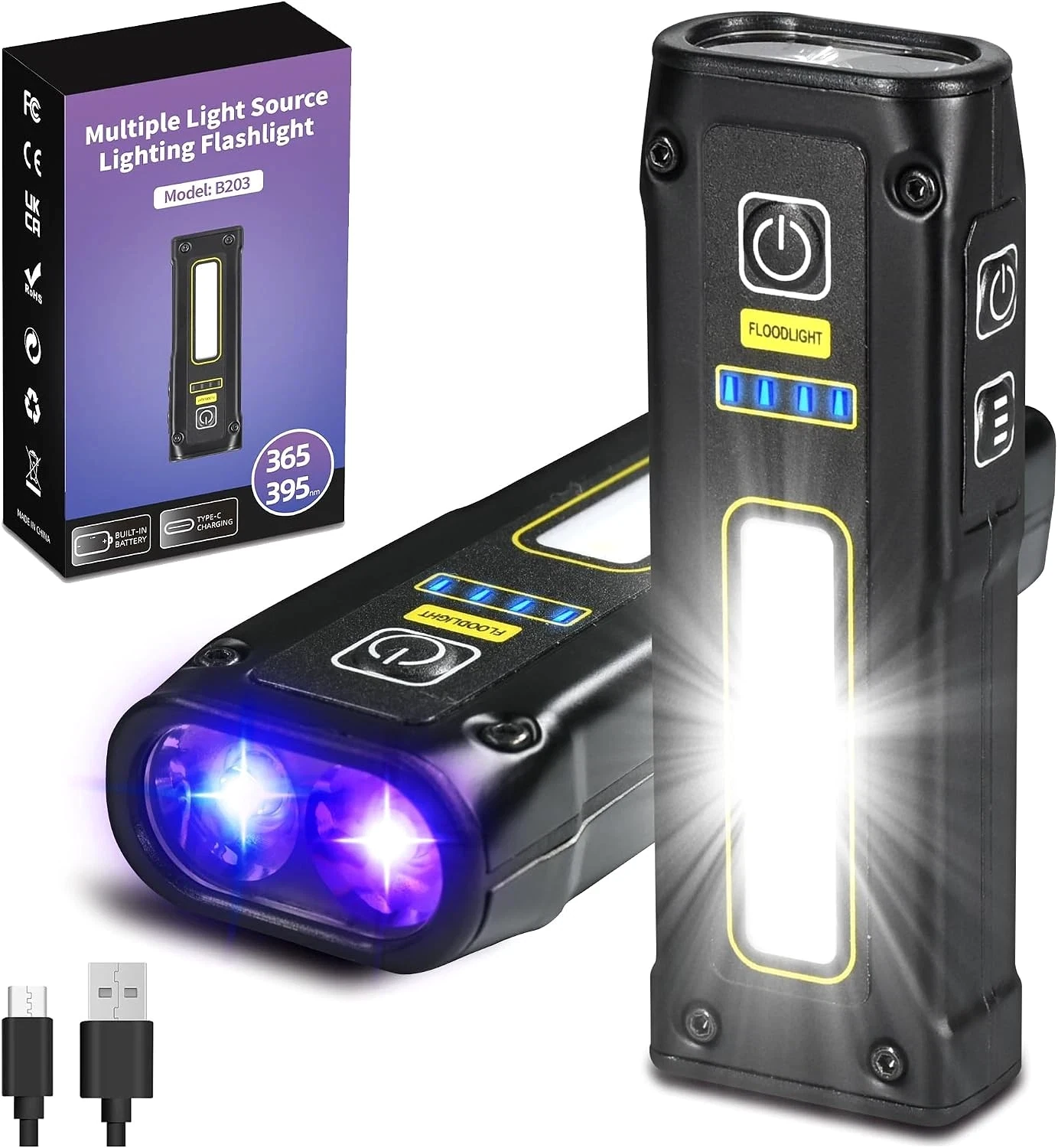
A dual-wavelength flashlight lets you compare a response without carrying two separate bodies. The DARKBEAM A900 dual-UV configuration combines 365nm and 395nm modes. A paired set, such as our separate 365nm and 395nm compact lights, gives you two physical tools instead. Those are different ways of working, even when the wavelength choices sound similar.
Choose a dual-mode body if compact packing and switching between wavelengths matter most. Choose separate lights if two people will work together, if you want one stored in a second location, or if you prefer to keep each wavelength clearly assigned. Read the selected configuration carefully: a white-plus-UV combination is not a dual-UV flashlight.
For any comparison, keep the specimen, distance and surrounding light as consistent as possible. Switch one variable at a time. Otherwise, a change in viewing angle or room brightness may look like a wavelength effect. The result is an observation under those conditions, not a standardized laboratory test.
Read the specifications that affect daily use
Charging is worth checking before you buy. Our range includes USB-C models, other rechargeable designs and battery-powered options. The connector, supplied cable and power instructions belong to the exact version. A familiar-looking socket does not mean every charger or battery is suitable.
Next, consider the controls. A pocket clip can make a compact light easier to carry. A side switch may feel different from a tail switch. Adjustable focus changes the coverage pattern; a fixed beam removes one adjustment from the process. None of these features is universally better. Think about whether you will wear gloves, work at a desk or hold another object.
Finally, be cautious with unlike output numbers. Lumens describe visible-light output using the sensitivity of human vision. Electrical watts, UV radiant power and irradiance at a surface are different measurements. Comparing a headline wattage with another maker's optical milliwatts does not establish which flashlight will perform better on your specimen.
Build a careful inspection routine
Keep UV away from eyes and skin, avoid direct and reflected exposure, and use protection appropriate to the light and task. Never look into an LED to check whether it is on. A less visible beam still needs careful handling. Keep children and animals away from the inspection area, and switch the light off before adjusting or packing it.
Use white light to walk into and out of a darkened space. Set the object down before switching to UV, and keep reflective surfaces in mind. If the flashlight becomes unusually hot, damaged or unreliable, stop using it and follow its care instructions. Do not open or improvise repairs to a rechargeable battery.
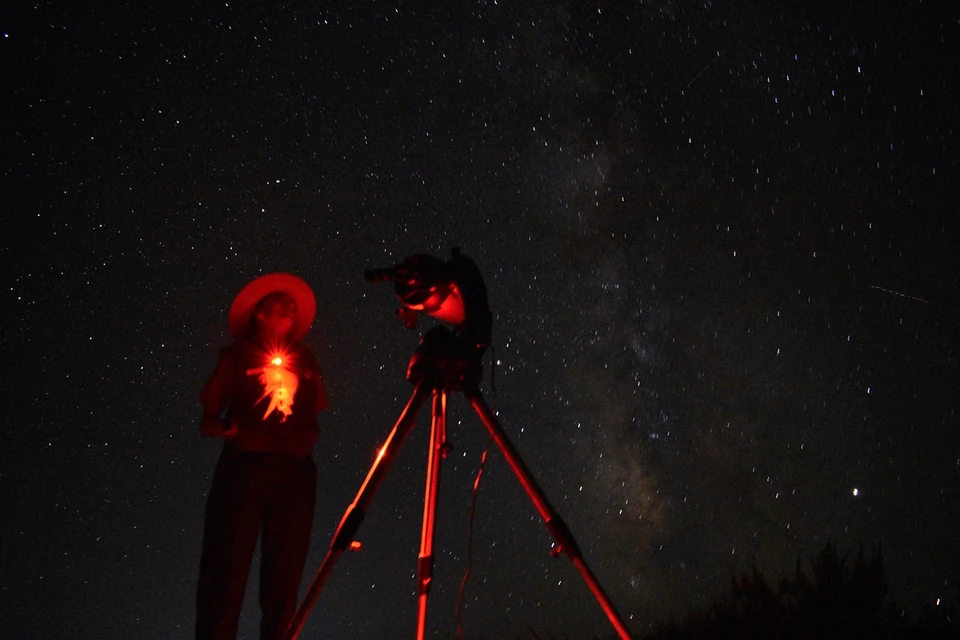
For regular use, keep a short record: model, wavelength, specimen, approximate distance and surrounding lighting. That habit makes your next observation more useful than a photo with no context. Our guide to lighting after dark helps you pair an inspection light with the white or red light needed for the rest of the job.
Make a choice you can explain
Choose 365nm UV when the response you want to observe benefits from that wavelength, and consider filtering when visible spill gets in the way. Explore 395nm UV for practical close-range fluorescence checks with a clearly visible violet beam. Choose a dual configuration when comparing wavelengths is part of the task.
Then narrow your choice by carrying size, controls, charging and the exact package. A well-chosen compact light is more useful than a powerful-looking tool that stays in a drawer. Start with the subject, learn what its response can tell you, and let those details guide the rest.
Further reading
GIA: fluorescence and optical defects ; Waveform Lighting: 365nm and 395nm emission characteristics ; University of Colorado: fluorescent minerals and UV precautions . Product selection and general guidance are separate from laboratory measurement.