A light for finding the path is not necessarily the light you want beside a telescope. A UV inspection tool is not a walking light. The most useful lighting kit begins with a few clear roles, then gives each role a tool you can operate comfortably in the dark.
Within the DARKBEAM collection, white-light flashlights, headlamps, red lights and UV models solve different problems. Infrared illuminators belong to a separate category again: they work with compatible night-vision equipment and do not provide ordinary visible light. Understanding those differences helps you avoid buying a feature that does not serve your task.
Start with the work you need to do
Write down the situations in which you actually need portable light. Perhaps you walk the dog after work, make occasional repairs, inspect fluorescent objects and keep a backup for power cuts. That list points toward a compact white flashlight, a hands-free option and a small UV tool. It does not automatically call for the largest possible model.
Next, consider duration and surroundings. A short job near home is different from an evening away from a charging point. A smooth floor needs a different view from an uneven path. Cold, rain, gloves and other equipment can also change how easy a light is to handle.
Separate essential lighting from specialist effects. White light helps you navigate and see ordinary objects. Red light can be useful when you want a dimmer, less disruptive task light around dark-adapted observers. UV reveals fluorescence. Infrared supports compatible imaging equipment. One category should not be expected to cover the others simply because each product is called a flashlight.
| Task | Useful starting point | What to check |
|---|---|---|
| Walking and general visibility | White-light flashlight | Beam coverage, controls and a suitable lower mode |
| Working with both hands | Headlamp | Fit, tilt, close-range beam and switch access |
| Reading a chart near a telescope | Dim red light | Controllable brightness and consideration for other observers |
| Examining fluorescent materials | 365nm or 395nm UV | Wavelength, filtering and safe handling |
| Supporting a night-vision device | Compatible IR illuminator | Device sensitivity, wavelength and mounting compatibility |
Choose the white-light beam you can use
A broad beam helps you see nearby surroundings without constantly moving the light. A more concentrated beam can make a distant area easier to inspect. Adjustable-focus models let you change the pattern, but moving a lens does not create more total light. Think about coverage and context before concentrating on a headline brightness figure.
For a path or a room, seeing the area around your feet matters. A narrow bright spot can leave nearby obstacles outside the beam. For a quick check across a yard, a more focused pattern may be useful. Try the controls in a safe setting before relying on them outdoors.
The DARKBEAM A300 white-light configurations offer a compact rechargeable format, with single and paired options. The A900 white-plus-395nm configuration combines general illumination with a separate UV function. That combination can reduce what you carry, provided you remember which mode is selected and use each for its intended job.
Read output and runtime claims together. A manufacturer's maximum setting and longest runtime often describe different modes or conditions. A usable lower mode, predictable controls and a charging routine may matter more than an impressive headline number. We do not treat a seller's maximum claim as an independent measurement.
When a headlamp earns its place
A headlamp puts light near your line of sight and frees both hands. That can help when sorting equipment, making a repair or moving objects. The trade-off is that the beam follows your head, including when you turn toward another person. Lower the output or angle the lamp down before speaking face to face.
Fit deserves attention. Adjust the strap in advance, check whether the lamp remains comfortable over a hat, and make sure the controls are easy to find. A tilting head can help place light on close work without forcing you to hold your neck at an awkward angle.
Compare the exact configuration rather than relying on the family name. Our headlamp collection includes white-light designs, white-and-red combinations and a red-light configuration. A two-pack contains two lamps; it does not necessarily add a different lighting mode. The product card identifies the selected version and supplied quantity.
For repairs, make sure the beam reaches the work without bouncing directly back from shiny surfaces. Position yourself so cables, straps and the lamp cannot catch in moving equipment. A headlamp is a lighting tool; it does not make an otherwise unsafe repair safe to attempt.
Red light: use less, not just a different color
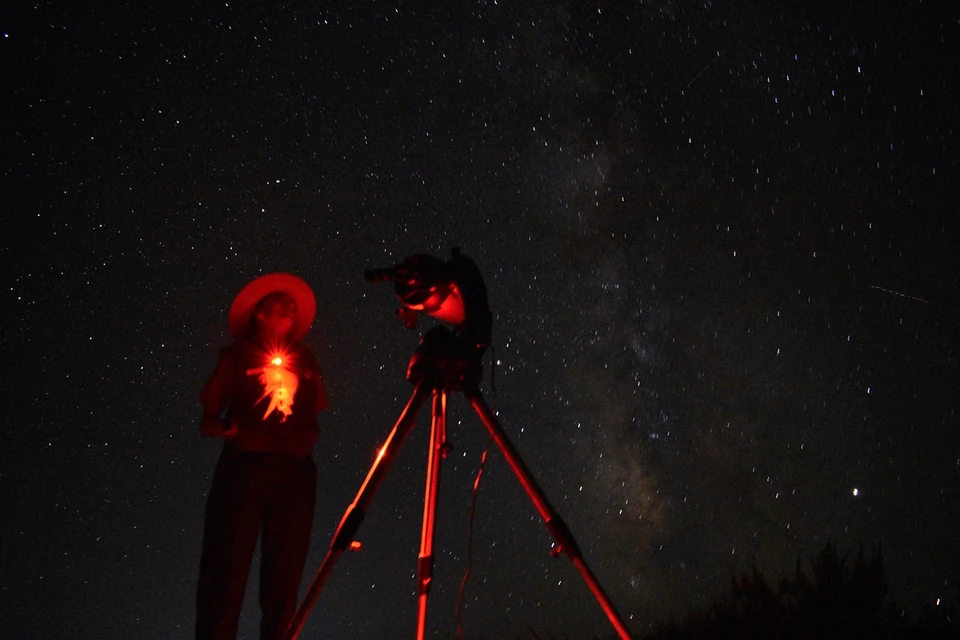
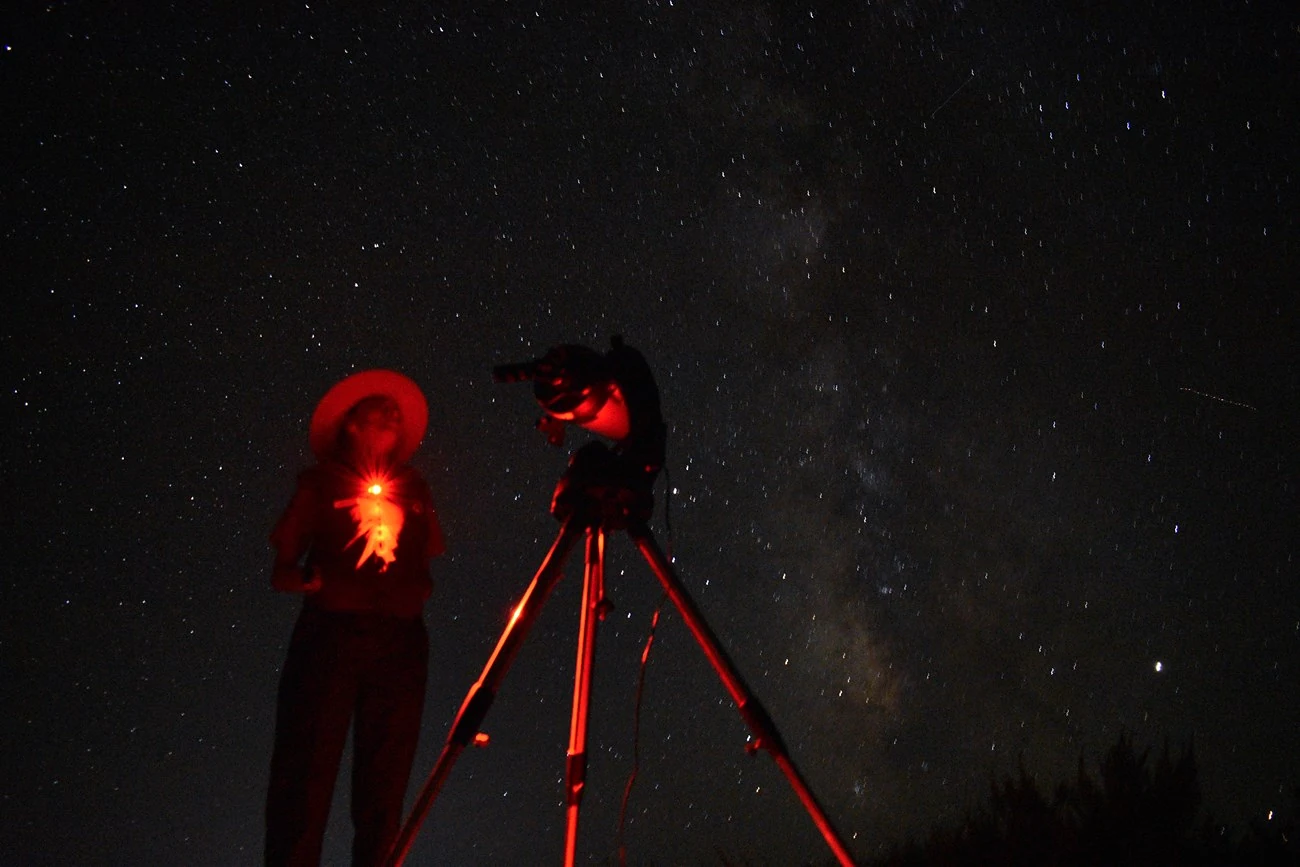
Red lighting is familiar at astronomy gatherings because it can be less disruptive to dark-adapted vision when used appropriately. Brightness still matters. A powerful red beam aimed into another observer's face can interfere with their view, even though it is not white.
“even a bright red light can reduce the rhodopsin so a dim red light is best”
National Park Service, guidance on dark adaptation
Choose the lowest useful setting for a chart, eyepiece case or nearby control. Keep the beam directed at the task and shield it from other observers. If a model's red output is not dim enough for the situation, use another suitable light rather than assuming the color alone solves the problem.
Our red-light range includes handheld and head-worn formats. A handheld light gives you direct control over where the beam points. A headlamp leaves your hands free but needs more care around other people. The dimmable 501M configuration is worth comparing when adjustable output is central to the task.
Bring a white-light backup for situations where full visibility becomes more important than preserving dark adaptation. Use it when needed for safe movement or an urgent task, while warning nearby observers when practical. Courtesy should never prevent you from seeing a hazard.
Keep UV and infrared in their own roles
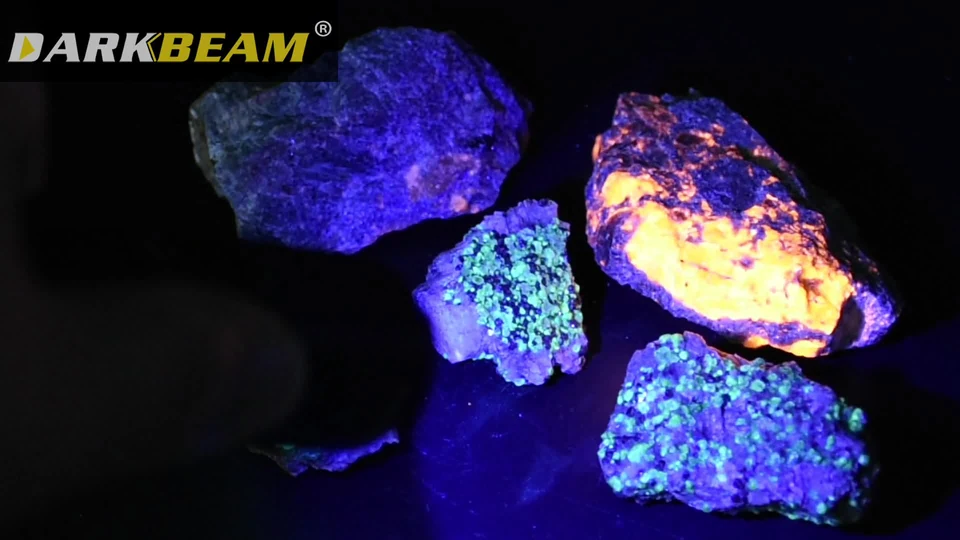
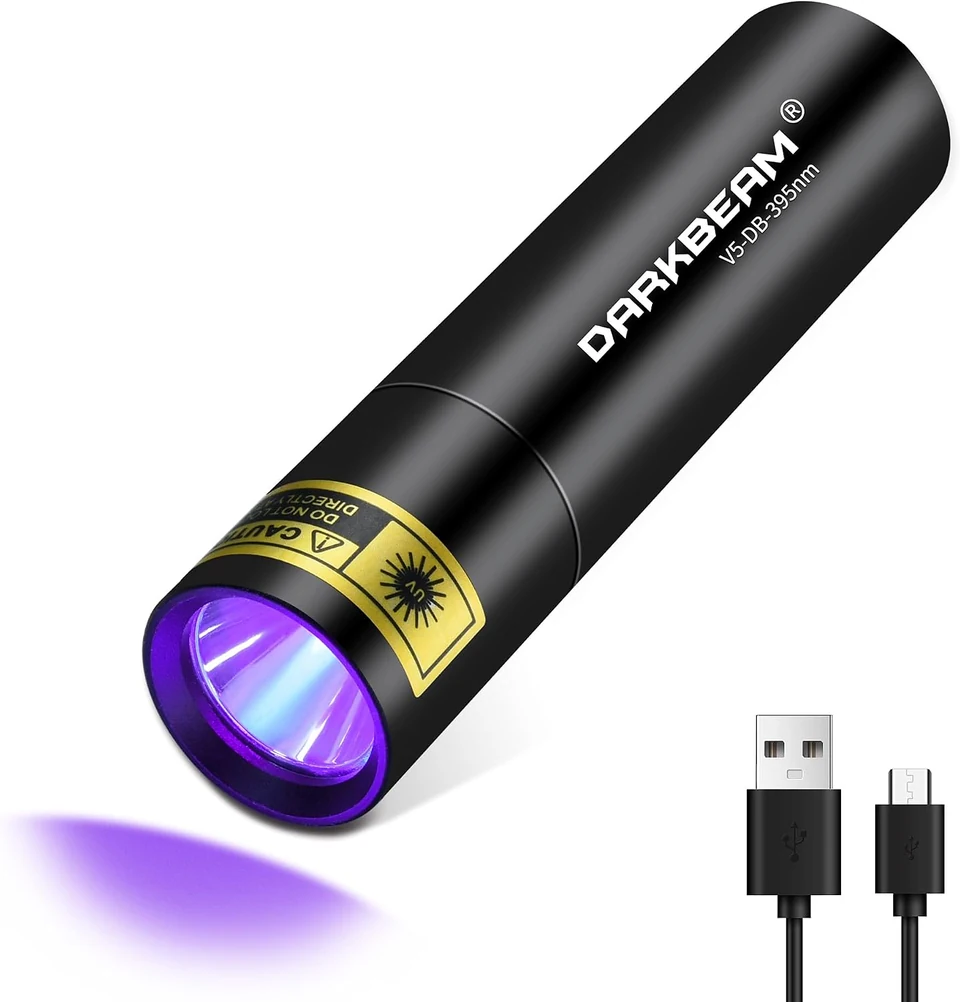
A UV flashlight is useful for observing fluorescent responses in compatible materials. It is not a replacement for ordinary illumination. Before inspecting an object, find a stable position in white light, clear the area and keep UV away from eyes and skin. Our wavelength guide explains how 365nm, 395nm and filtering affect the choice.
If you use UV around the home, remember that a glow does not identify a substance or prove a surface is clean. The home-inspection guide provides a repeatable scanning and marking method, with ordinary-light checks before any treatment.
Infrared illuminators are different from UV. Their purpose is to provide light that a compatible device can detect. The DARKBEAM IR collection includes 850nm and 940nm configurations, but the correct choice depends on the receiving equipment. Check its wavelength sensitivity and the light's mounting and power requirements before selecting a kit.
Do not look into an infrared emitter to test it, and do not judge output by what your eyes can see. Infrared is not a visible navigation beam. Keep a separate white light available and follow the illuminator and imaging-device instructions. Accessories pictured beside a light are not a promise that every camera, optic or mount will fit.
Plan power before you leave
Charge rechargeable lights in advance using the instructions for each model. Check the supplied cable and input requirements rather than assuming every USB product accepts the same setup. Inspect connectors for damage and keep the charging area dry.
For a longer outing, decide how you will restore power and what you will do if the main light stops working. A power bank is useful only if it is compatible, charged and accessible. A second light provides a more immediate backup than a cable alone. Keep the backup where you can reach it without unpacking everything in darkness.
If a flashlight uses replaceable batteries, follow the specified type and orientation. Similar dimensions do not establish electrical compatibility. Do not substitute a higher-voltage rechargeable cell simply because it appears to fit, and do not mix old and new batteries where the instructions prohibit it.
Use a small pre-departure check: switch each light on, cycle the intended modes, inspect the lens and confirm the charge or battery condition. Then turn everything off and secure it against accidental activation. This is faster and more useful than discovering an unfamiliar switch sequence after dark.
Understand water resistance and maintenance
Water resistance belongs to the exact model and its stated rating. Splash resistance should not be read as permission to immerse the light. Keep charging-port covers and seals in the condition described by the instructions, and do not charge a wet product.
After use, remove surface dirt with a suitable gentle method and let equipment dry before storage. Avoid solvents or abrasive cleaning unless the manufacturer specifically permits them. Check straps, clips, cables and controls for damage. A loose clip or damaged strap can matter as much as the beam itself.
If a light becomes unusually hot, unreliable or visibly damaged, stop using it. Do not continue charging a damaged battery or improvise a repair. Keep your model name and order details together so the support process starts with the correct configuration.
Build a small kit around your habits
For everyday use, start with one white-light flashlight and a dependable way to keep it powered. Add a headlamp if you regularly need both hands. Add red light for an activity that benefits from carefully controlled low illumination. Add UV or infrared only when you have a specific, compatible task.
Store each light where its role makes sense: a household backup in a known place, a compact light with everyday essentials, or a specialist inspection tool beside the objects it is used to examine. Familiarity matters. A light you can find and operate confidently is more useful than an elaborate collection you have never practiced using.
Explore the DARKBEAM collection by purpose, compare the selected versions, and choose the combination that fits your routine. Clear roles make a better kit—and leave less to work out when the light changes.
Further reading
National Park Service: dark adaptation and red flashlights ; REI: choosing a headlamp ; University of Colorado: UV precautions . Image credit: NPS/Martin Tow.